Why Apple Pay Doesn’t Work Well in Korea (And Samsung Pay Does)
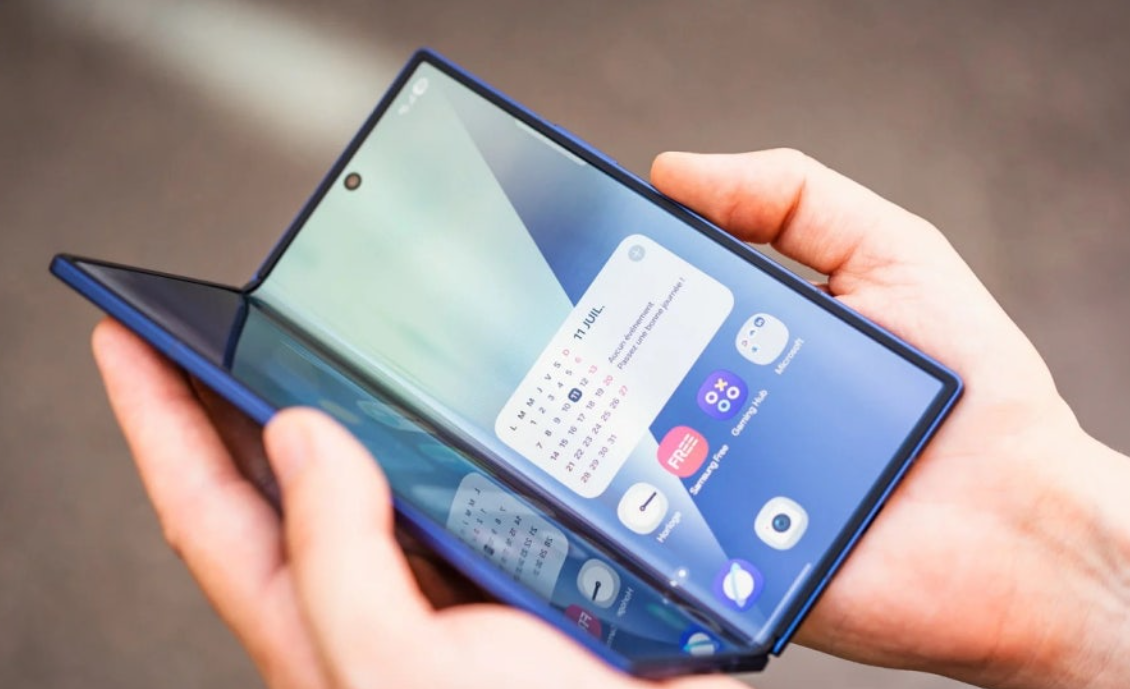
It’s a common topic among foreigners traveling in Korea, and among iPhone users living there too: why does Samsung Pay work so much more reliably in Korea than Apple Pay? Anyone who’s spent time in the country has probably experienced this firsthand — Apple Pay works fine at a café or convenience store, but then fails completely at a neighborhood restaurant, a traditional market stall, or a small independent shop. Samsung Pay, on the other hand, works almost everywhere without issue. This gap isn’t really about brand recognition or user numbers — it comes down to a fundamental difference in the underlying payment technology each system relies on.
The core reason is the payment terminal infrastructure itself. Apple Pay relies exclusively on NFC. NFC is a short-range wireless communication technology where a phone and a terminal “tap” to complete a transaction. The problem is that Korea’s payment terminal infrastructure was never really built around NFC to begin with. For decades, Korea’s standard was magnetic-stripe swiping or inserting an IC chip card, and even as of 2026, only around 10% of the country’s roughly 2.9 million small-business merchants have terminals capable of NFC payments. Samsung Pay, by contrast, supports both NFC and MST (Magnetic Secure Transmission). MST works by mimicking the magnetic signal a card produces when swiped, so simply holding the phone near an old-school card terminal is enough for it to register the payment exactly as if a physical card had been swiped. That’s the reason Samsung Pay can work in nearly any store nationwide without requiring any terminal upgrade or replacement — it’s entirely down to MST.

Uncover incredible deals and embrace a seamless shopping spree on Temu! 😊
👉 item link: https://temu.to/k/p37qxb9u6po
🎉 Coupon price[$7.18]
Phone Case – Phone Case Designed for Heat Dissipation Featuring a 360° Rotatable Stand, Compatible with for Iphone 11 Through 17 Pro, Including Plus And Pro Max Versions. It Offers Shockproof Protection And Includes a Foldable Hidden Stand
🚀 Help Me Earn Instantly — Just 1 Click!
Hi! Join Temu’s affiliate program via my link—it’s free. I’ll earn up to $50, and you’ll get free rewards instantly! 🎉
💡 Commission Boost: Your commission auto-upgrades to 35% after signing up!
🔗 https://temu.to/k/p590cevtkpa
inc151317
The second reason is the difference in how each system partnered with card issuers. Apple Pay first launched in Korea in March 2023 through an exclusive deal with Hyundai Card. At the time, Hyundai Card had to roll out its own NFC terminals across major franchises and large merchants to make Apple Pay work, and any other card company wanting to add Apple Pay afterward had to shoulder the burden of building similar infrastructure from scratch. On top of that, Apple reportedly charges card issuers a fee of roughly 0.15% of each transaction — a meaningful cost for card companies. Samsung Pay, by comparison, charges card issuers no separate fee, since its purpose is to expand the Galaxy ecosystem rather than generate direct payment-processing revenue. Because of this structural difference, other Korean card companies have been slow to adopt Apple Pay, and as a result it remains concentrated mostly among a handful of card issuers and large merchants.
A third factor is transit-card integration. Samsung Pay embeds T-money and other transit card functionality directly onto Galaxy devices, letting users tap in and out of public transit freely with domestically issued cards. Apple Pay’s transit integration came much later, and only recently began offering limited support — allowing certain foreign-issued Mastercards to tap directly at Seoul subway gates. For anyone hoping to use a domestically issued card as freely as a T-money card on public transit, Apple Pay still leaves something to be desired.
Putting all of this together, it’s clear why Samsung Pay works so much more reliably than Apple Pay across Korea. At places with NFC terminals — convenience stores, large café chains like Starbucks, department stores, big-box supermarkets — Apple Pay works just fine. But at traditional markets, neighborhood restaurants, small independent shops, and some taxis that still run on older magnetic terminals, Apple Pay often simply doesn’t work at all. Samsung Pay, thanks to MST, functions on those same older terminals without a hitch, giving it the overwhelming advantage of working essentially anywhere in the country.

Bottom line: if you’re planning a trip to Korea and weighing whether a Galaxy or an iPhone will make payments easier, at least from a payment-infrastructure standpoint, the Galaxy-plus-Samsung-Pay combination has a clear edge. iPhone users are better off not relying on Apple Pay alone and should carry a physical foreign-issued card or cash as backup, whereas Galaxy users can typically get by on Samsung Pay alone almost anywhere in the country — a real and practical difference in travel convenience.