Solana Outlook 2026: Firedancer Upgrade, Institutional Adoption, and Price Forecasts
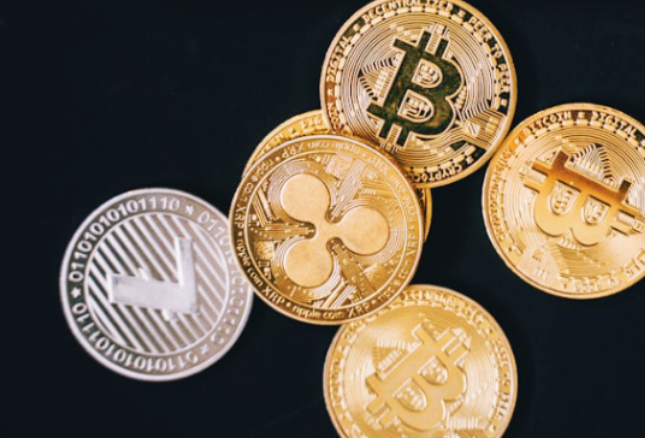
In 2026, Solana (SOL) has reinforced its standing as the primary high-throughput settlement engine for decentralized applications, institutional micropayments, and high-frequency digital finance. Following periods of broader market consolidation, the network’s value proposition is increasingly defined by real-world usage, enterprise integration, and landmark technological hard forks designed to scale throughput beyond one million transactions per second. Supported by validator client diversification, record-high on-chain capital commitment, and mainstream payment alliances, Solana’s long-term growth trajectory remains a central focus for retail and institutional market participants alike.
Current Market Performance and Price Predictions for 2026
Mid-2026 Market Dynamics and Capital Resilience
Throughout the first half of 2026, Solana experienced price consolidation within the $80 to $100 range after retreating from earlier cyclical peaks. Despite broader risk-off market conditions driven by global macroeconomic headwinds, on-chain fundamentals reveal a structurally resilient network ecosystem.
Notably, SOL-denominated Total Value Locked (TVL) reached an all-time high of over 80 million SOL in early 2026, demonstrating that capital commitment within Solana’s decentralized finance (DeFi) protocols continues to expand regardless of fiat valuation swings. Furthermore, network utilization remains high, averaging over 2,000 to 3,000 transactions per second (TPS) with daily active address counts exceeding 2.7 million.
Key financial institutions and research models project a positive multi-year recovery:
- Standard Chartered: Revised its end-of-2026 target to $250, with a long-term projection reaching $2,000 by 2030. The bank highlights Solana’s sub-cent transaction costs (median ~$0.0007) as a disruptive force capable of capturing global stablecoin micropayment volume from traditional processors.
- Institutional & AI Consensus Models: Intermediate scenarios project 2026 ranges between $150 and $320, contingent upon potential U.S. spot ETF approvals and sustained execution of technical roadmaps.
Reference News & Market Context:
- For analysis on market positioning and macroeconomic catalysts, readCapital.com’s Solana Price Prediction & On-Chain Report.
- Review institutional price target models and ETF inflow analysis viaOneBullEx’s Solana Price Prediction 2026–2030.
Major Technical Roadmaps: Firedancer and the Alpenglow Upgrade
Solana’s technical roadmap in 2026 is laser-focused on eliminating single points of software failure, reducing transaction finality times, and expanding bandwidth for global enterprise scale.
Firedancer & Frankendancer Rollout
Developed independently by Jump Crypto, the Firedancer validator client represents a complete ground-up reimplementation of the Solana protocol written in C.
- Client Diversity: Firedancer eliminates reliance on the legacy Agave codebase, providing true validator client diversity and eliminating network-wide outage risks.
- Extreme Throughput: In benchmark environments, Firedancer supports transaction throughput exceeding 1,000,000 TPS, establishing Solana as the fastest blockchain infrastructure in existence.
The Alpenglow Consensus Upgrade
Scheduled for mainnet implementation in mid-to-late 2026, the Alpenglow consensus upgrade transforms network finality:
- Sub-Second Finality: Reduces transaction finality latency from approximately 12.8 seconds down to a rapid 150 milliseconds.
- High-Frequency Trading Efficiency: This performance boost positions Solana to power institutional order books, algorithmic trading, and real-time point-of-sale retail transactions without performance lag.
Reference News & Technical Architecture:
- Read technical breakdowns of validator developments onBlockdaemon’s Solana 2026 Technical Roadmap.
- Track upgrade announcements and ecosystem milestones viaCoinMarketCap’s 2026 Solana Analysis.
Enterprise Collaborations and Mainstream Financial Adoption
Solana’s ecosystem growth in 2026 is underpinned by strategic partnerships with major payment networks, financial legacy firms, and Web3 innovators.
Global Payment Gateways: Stripe, PayPal, and Visa Integration
Solana’s low transaction fees and fast settlement times have made it the primary choice for global fintech payment rails:
- Stripe & PayPal USD (PYUSD): Global payment providers utilize Solana to process merchant settlements and stablecoin transfers. By routing payments through Solana, merchants bypass typical credit card processing fees.
- Western Union & Remittance Protocols: Partnerships focused on cross-border corridor liquidity deploy Solana-based stablecoins to execute real-time remittances across North America, Latin America, and Asia.
Wall Street ETF Filings and Institutional Products
Traditional financial institutions are increasingly engaging with Solana as an asset class and protocol layer:
- Spot SOL ETF Filings: Major asset managers, including Morgan Stanley and VanEck, maintain active filings for spot Solana ETFs. Analysts at JPMorgan project potential first-year net ETF inflows of $3 billion to $6 billion upon regulatory greenlights.
- DeFi Capital Inflows: Institutional liquidity providers are utilizing Solana-native decentralized exchanges (such as Jupiter) and automated market makers, taking advantage of deep liquidity and near-zero slippage.
Reference News & Corporate Partnerships:
- Explore institutional research on Solana’s market strength atDisruption Banking’s Solana 2026 Analysis.
- Learn more about ecosystem performance metrics onEarnpark’s Solana Growth & Forecast Guide.

Conclusion: Long-Term Potential of the Solana Ecosystem
Heading through 2026, Solana has evolved from an emerging alternative Layer-1 blockchain into an indispensable layer of global financial technology. While macro shifts and broad market corrections present short-term challenges, the protocol’s core metrics—including record SOL-denominated TVL, major client upgrades like Firedancer, sub-second finality via Alpenglow, and expanding enterprise payment integration—highlight an ecosystem with immense structural utility. For long-term investors, institutions, and web3 developers, Solana represents a premier venue for scalable, internet-native capital markets.
