CLARITY Act’s August Timeline Looks Shaky, But Goldman Sachs CEO Backs the Bill Anyway — “Imperfect, But Support It”
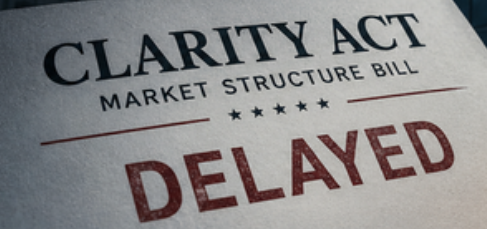
U.S. Senate leadership has signaled that the CLARITY Act — the crypto market-structure bill — is unlikely to clear Congress before the chamber’s summer recess. White House crypto advisor Patrick Witt pushed back against that pessimism in a Thursday interview with CoinDesk TV, saying he was “a little puzzled” by the negative outlook and describing himself as “somewhat more optimistic.” The same day, Goldman Sachs Chairman and CEO David Solomon told Politico that while the bill is “not perfect,” he supports it — a notably different stance from the broader Wall Street banking community, which largely opposes the bill’s stablecoin yield provisions.
Witt noted that the Senate still has its first week of August in session, so he wasn’t ready to rule out action. Still, even he acknowledged a final vote in July was unlikely. With midterm elections looming in November, lawmakers are expected to spend much of the summer recess campaigning rather than legislating. The Senate and House are scheduled to reconvene for roughly three weeks in September, meaning that even if the Senate manages to pass the bill, the House would still need to take it up separately afterward.
Within the crypto industry, the CLARITY Act is considered an even higher policy priority than last year’s stablecoin law, the GENIUS Act. Industry participants hope it will establish a permanent legal foundation for crypto activity in the U.S. But the Senate floor process requires clearing a 60-vote threshold through multiple procedural steps, a process that could take several days on its own. Complicating matters further, some Republican senators have voiced concerns over how the bill treats stablecoin yield and over the wording of its government ethics provisions — meaning even a simple majority isn’t fully secured at this point.

Uncover incredible deals and embrace a seamless shopping spree on Temu! 😊
👉 item link: https://temu.to/k/pn26winzsfa
🎉 Coupon price[$122.03]
VEVOR Retractable Garden Hose Reel, 1/2 inch / 5/8 Inch x 65ft / 85ft / 100ft Wall Mounted, Heavy Duty with 9-Pattern Nozzle, Adjustable Length Lock, Upgraded Slow Return System & 180° Swivel Bracket
🚀 Help Me Earn Instantly — Just 1 Click!
Hi! Join Temu’s affiliate program via my link—it’s free. I’ll earn up to $50, and you’ll get free rewards instantly! 🎉
💡 Commission Boost: Your commission auto-upgrades to 35% after signing up!
🔗 https://temu.to/k/p590cevtkpa
inc151317
Solomon’s comments to Politico on Thursday framed his support in pragmatic terms: “Like every other piece of legislation, the CLARITY Act isn’t perfect — there’s plenty to debate and argue about.” Even so, he emphasized that one of the bill’s most important contributions is creating a level playing field that enhances market stability and allows the market to develop properly. “I strongly support continuing to push the CLARITY Act forward so we can build out market structure and advance the innovation process,” he added, according to Politico’s report — and he suggested the framework could help draw more institutional investors into the crypto market.
Solomon’s position stands apart from the stance taken by many of Wall Street’s largest banks. JPMorgan Chase CEO Jamie Dimon said in a May interview that the CLARITY Act would let crypto companies pay stablecoin interest “without safeguards,” and stated flatly that banks wouldn’t accept that arrangement. A coalition of banking trade groups has likewise pushed back, demanding stricter limits on stablecoin yield provisions. According to Politico, Solomon also suggested the framework could help draw significantly more institutional capital into crypto markets over time.
At the heart of the bill are its stablecoin yield and ethics provisions. If passed, the CLARITY Act would formally legalize most crypto activity in the U.S. and classify the majority of digital assets as commodities rather than securities, removing them from SEC jurisdiction. It also includes protections for decentralized software developers and provisions governing reward practices tied to stablecoin holdings. Ahead of a possible Senate vote next week, Republican senators unveiled revised bill language on Wednesday, which includes ethics provisions addressing Democratic concerns over President Trump’s crypto investments. Many Democrats argue these provisions still fall short, pointing out that enforcement is assigned to the Department of Justice rather than state authorities.
To pass the Senate, Republicans need Democratic cooperation to clear the 60-vote threshold — but many Democratic senators remain hesitant to vote yes, citing the inadequacy of the ethics language. As of Thursday, Senate leadership had not yet scheduled a floor vote. While Witt maintained that the Senate’s first week back in August still offers a window of opportunity, Senate leadership itself has projected that passage before the summer recess is unlikely.
Even if the bill clears the Senate, it still faces separate action in the House. With both chambers set to reconvene for roughly three weeks in September, final passage is increasingly likely to be pushed past that point. And even with supportive voices like Solomon’s in the mix, the persistent gap between the banking industry and the crypto sector over stablecoin yield provisions remains the single biggest variable standing between the bill and passage.
