Galaxy Z Fold8 vs iPhone 17: Full Comparison from Display to Performance
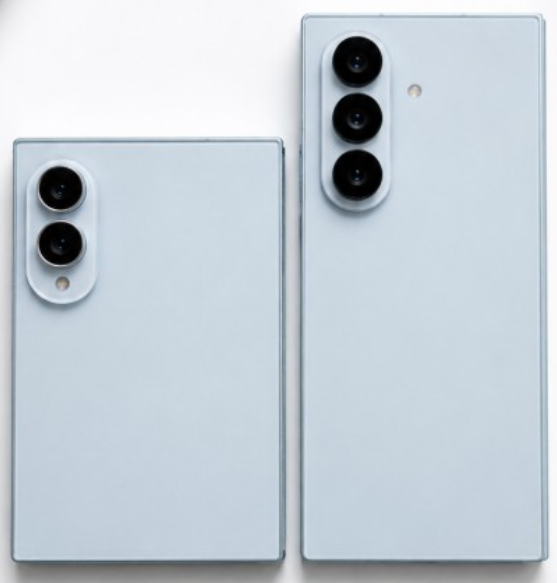
Comparing the Samsung Galaxy Z Fold8 with the iPhone 17 is genuinely interesting precisely because you’re weighing two devices from entirely different categories. One leads with a brand-new foldable form factor as a premium flagship, while the other represents the refined standard of what a candy-bar smartphone can be. Rather than judging them purely by spec sheets, it’s more useful to look at which strengths matter most to which kind of user.
Starting with display size, the difference is immediately obvious. The Galaxy Z Fold8 features a 5.5-inch cover screen and a 7.6-inch main display, and this generation shifted to a wider, shorter shape so the cover screen itself feels usable like a normal phone. When unfolded, a spacious 4:3 panel opens up, delivering standout usability for video, gaming, multitasking, and document work. The top-tier Fold8 Ultra pushes this further with an 8.0-inch main display — the largest in the foldable lineup — while somehow keeping the thickness down to just 4.1mm when unfolded. The iPhone 17, by contrast, relies on a single 6.3-inch Super Retina XDR display. It obviously can’t match the Fold8’s screen real estate, but this generation finally brings 120Hz ProMotion and an always-on display down to the standard model, so scrolling and animation smoothness leave little to be desired.
On performance, both phones pack the latest flagship silicon. The Galaxy Z Fold8 runs a Galaxy-optimized Snapdragon 8 Elite Gen 5, paired with 16GB of RAM and up to 1TB of storage, giving it plenty of headroom for multitasking and heavy workloads. Combined with the wide foldable display, split-screen multitasking reaches an efficiency level ordinary smartphones simply can’t touch. The iPhone 17 runs the A19 chip, built on a 3nm process with a 6-core CPU and 5-core GPU plus a neural accelerator, meaningfully improving on-device AI performance. Its 8GB of RAM is lower than the Fold8’s, but because iOS manages memory differently from Android, real-world performance doesn’t feel as far apart as the raw numbers suggest.
Battery and charging speed also differ. The Galaxy Z Fold8 carries a 4,800mAh battery with 45W fast charging, rated for up to 26 hours of video playback, while the Fold8 Ultra bumps that up to a 5,000mAh cell. The iPhone 17’s 3,692mAh battery looks smaller on paper, but thanks to the A19 chip and Apple’s own N1 networking chip improving power efficiency, it’s rated for up to 30 hours of video playback — actually outlasting the Fold8 in real-world battery life. Charging tops out at 40W wired and 25W wireless via MagSafe.
Weight and thickness reveal two very different design philosophies. At 201 grams, the Galaxy Z Fold8 is the lightest Fold to date, though the inherent thickness of a foldable form factor is still there. The iPhone 17, at 177 grams and 7.95mm thick, offers the kind of portability you’d expect from a standard candy-bar phone. For anyone who prioritizes one-handed grip or pocket bulk, the iPhone 17 is clearly the more comfortable option.

Uncover incredible deals and embrace a seamless shopping spree on Temu! 😊
👉 item link: https://temu.to/k/p37qxb9u6po
🎉 Coupon price[$7.18]
Phone Case – Phone Case Designed for Heat Dissipation Featuring a 360° Rotatable Stand, Compatible with for Iphone 11 Through 17 Pro, Including Plus And Pro Max Versions. It Offers Shockproof Protection And Includes a Foldable Hidden Stand
💥 Flash drop! Temu codes are here. Don’t Miss Out! 🎉
【 ali734824 】 Unlock a $100 Coupon Bundle + 30% OFF on your first Temu app order! 👉 https://temu.to/k/p1jl6x8di7t
Camera setups differ too. The iPhone 17 packs a 48MP Dual Fusion camera system alongside an 18MP Center Stage front camera, and this generation introduces simultaneous front-and-rear Dual Capture recording. The Galaxy Z Fold8’s camera focus leans less on raw specs and more on foldable-specific versatility — being able to switch between the cover screen and main display opens up more creative angles for selfies and group shots.
On the software side, the Galaxy Z Fold8 ships with One UI 9 on Android 17 and comes with a promised seven years of major updates, while the iPhone 17 runs iOS with a track record of five-plus years of long-term software support — so both are solid choices for anyone planning to keep their phone for the long haul. Pricing is where the gap really widens: the Galaxy Z Fold8 starts at $1,900 for the 256GB model, while the iPhone 17 starts at just $799, a dramatically lower barrier to entry.

In the end, the Galaxy Z Fold8 suits users who want the productivity boost of a wide display, serious multitasking power, and the novel experience only a foldable can offer. The iPhone 17 fits users who want proven, polished performance, long battery life, and light, easy portability at a far more accessible price. Both phones are excellent within their own category — so the real decision comes down to whether you want to invest in the foldable experience, or stick with the tried-and-true reliability of a traditional smartphone form factor.