A Crypto Analyst’s Bold Proposal for Japan’s Currency Woes
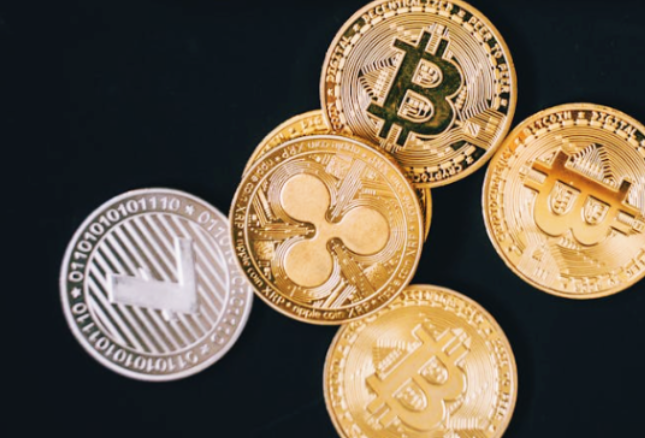
As Japan’s yen continues to weaken under sustained pressure, one cryptocurrency analyst has floated an unconventional solution: using Ripple’s XRP token to ease the structural pressures dragging the currency down. The proposal argues that XRP could help Japan navigate its currency crisis without triggering the kind of global asset sell-off that more drastic policy interventions might cause. Notably, the idea doesn’t focus on Japan’s debt burden at all — instead, it zeroes in on how efficiently capital moves across borders.
The Roots of Japan’s Currency Problem
Japan currently finds itself squeezed by what’s known as the carry trade — a dynamic in which investors borrow cheap yen and invest the proceeds in higher-yielding foreign assets. Driven by the country’s persistently low interest rate policy, the yen has fallen to around 157 against the U.S. dollar. Both the U.S. and Japanese governments have already stepped in to try to stabilize the currency: the U.S. government purchased yen for the first time in nearly 30 years, acting in coordination with the Bank of Japan. Despite this joint intervention, Japan remains stuck between two uncomfortable choices — tolerating continued yen weakness, or raising interest rates and risking turmoil in the bond market.

Uncover incredible deals and embrace a seamless shopping spree on Temu! 😊
👉 item link: https://temu.to/k/pyz5f350760
🎉 Coupon price[$36.67]
[Super Bright Solar Lights] Glass Metal 8 Pack Solar Pathway Lights Outdoor 20Lumens Solar Garden Lights Glass Stainless Steel Auto-on/off Solar Landscape Lights for Lawn, Patio, Yard, Garden, Pathway, Driveway
A Payments-Focused Alternative
Crypto analyst EGRAG CRYPTO has proposed a different kind of solution — one centered not on monetary policy, but on payment infrastructure. The core problem he identifies is pre-funding: Japanese financial institutions currently have to park foreign currency in overseas banks ahead of time in order to process international settlements. This practice ties up capital that could otherwise be put to work within Japan’s own economy. His proposal is for XRP to serve as a neutral bridge asset in this process — converting yen into XRP at the moment of settlement, then converting it into the destination currency within just three to five seconds.
How the XRP-Based Solution Would Work
If settlement can be completed in such a short window, the theory goes, payment delays shrink and the need to pre-position funds overseas disappears entirely. Banks and companies would then be able to hold more capital in yen domestically, rather than tying it up abroad in anticipation of future international transactions. According to the analyst, this wouldn’t eliminate the underlying interest rate gap between Japan and other countries, but it could reduce one of the structural drivers of yen weakness — the ongoing need for Japanese institutions to hold large foreign currency reserves purely for settlement purposes. Export revenues and remittances, he argues, could be converted back into yen faster and more cheaply as a result.
Efficiency Gains, Not a Policy Substitute
The analyst was careful to frame the limits of his own proposal. Adopting XRP, he explained, could improve how funds move and how quickly settlements are processed, allowing institutions to use their capital far more efficiently. This, in turn, could buy Japan some breathing room to pursue its monetary policy goals — but he was explicit that technology cannot substitute for a country’s actual economic policy.
The Case Against the Proposal
Despite the appeal of the idea, real obstacles stand in the way of it becoming reality. Critics point out that pre-funding is a symptom of the interest rate imbalance, not its root cause — and speeding up settlement doesn’t shrink the rate differential that drives capital abroad in the first place. Japan’s cross-border carry trade activity runs into the trillions of dollars, while the scale of pre-funded capital involved is comparatively much smaller. On top of that, actually implementing this kind of system would require deep liquidity between XRP and the yen, clear regulatory frameworks, and integration with existing banking systems — none of which currently exist. The Bank of Japan has explored asset digitization and payments through its own Agorá project, but has never endorsed XRP specifically, instead favoring central-bank-led infrastructure.

A Cautionary Precedent from El Salvador
There’s already a real-world case study suggesting how difficult it can be to solve financial inefficiencies purely through technology. In 2021, El Salvador adopted Bitcoin as legal tender specifically to reduce remittance fees. However, due to inadequate infrastructure and Bitcoin’s price volatility, actual adoption among citizens remained low. It stands as a clear example that technology alone struggles to overcome a country’s deeper structural economic limitations — a lesson that may well apply to XRP’s proposed role in fixing Japan’s currency troubles.