The IMF Just Named the XRP Ledger — Here’s What It Actually Means for Ripple
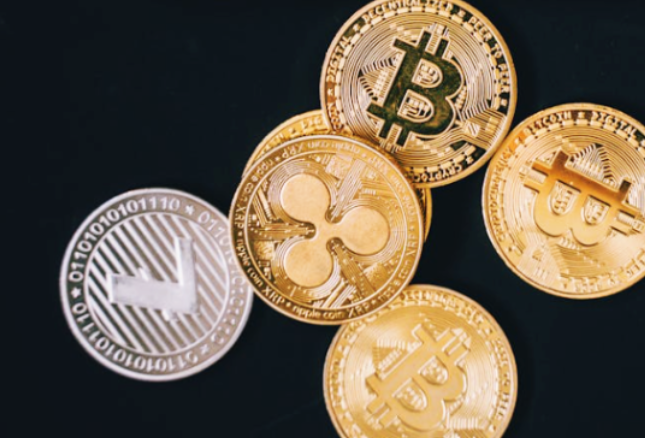
In early July 2026, the International Monetary Fund published a research note titled “The Rise of Tokenization: Deciphering New Trends in Payments and Asset Tokenization.” Buried on page seven of this 25-page paper is a single sentence that set off a wave of excitement across the crypto community: the IMF cited the XRP Ledger by name as one of the public blockchain networks banks are actively using to issue regulated stablecoins. For a token that has spent much of 2026 struggling to translate corporate partnerships into price momentum, having a reference from one of the world’s most influential financial institutions felt like a milestone worth celebrating. But as several analysts have since pointed out, the actual substance of the mention is more nuanced than the headlines suggest.
What the IMF Report Actually Says
The IMF’s note examines how banks and financial institutions are increasingly turning to blockchain technology to modernize payments, settlement, and asset management. According to the report, while many institutions still rely on private, permissioned ledgers, a growing number are choosing permissionless public blockchains instead — largely because these networks offer greater interoperability and broader market access. Rather than crowning any single blockchain as a winner, the IMF simply observes this trend as an emerging pattern across the financial sector.
The Société Générale Example
The specific case cited by the IMF involves Société Générale, one of France’s largest and longest-standing banking institutions. Through its digital assets subsidiary, SG-Forge, the bank has issued a euro-denominated stablecoin called EUR CoinVertible (EURCV). Crucially, this stablecoin isn’t limited to a single chain — it has been deployed across four separate networks: Ethereum, Solana, Stellar, and the XRP Ledger. The IMF references this multi-chain deployment as a practical, real-world example of how established financial institutions are beginning to embrace public blockchain infrastructure for regulated digital currency products.

Uncover incredible deals and embrace a seamless shopping spree on Temu! 😊
👉 item link: https://temu.to/k/pig19x3f1qw
🎉 Coupon price[$36.67]
[Super Bright Solar Lights] Glass Metal 8 Pack Solar Pathway Lights Outdoor 20Lumens Solar Garden Lights Glass Stainless Steel Auto-on/off Solar Landscape Lights for Lawn, Patio, Yard, Garden, Pathway, Driveway
Six Networks, Not Just One
It’s also worth noting that the XRP Ledger wasn’t singled out in isolation. According to a detailed breakdown from crypto outlet DailyCoin, the IMF note names six blockchain networks in total across its analysis: Ethereum, Solana, Stellar, the XRP Ledger, Base, and Tempo. Notably, Bitcoin isn’t mentioned at all. This context matters — the XRP Ledger is being grouped alongside several other competing networks as one viable option among many, rather than being highlighted as a uniquely preferred choice.
Infrastructure Recognition, Not a Token Endorsement
Here’s where the nuance becomes critical for XRP investors specifically. The IMF’s report discusses the XRP Ledger as a piece of settlement infrastructure — the underlying network banks can build on. It does not discuss the XRP token itself as a bridge currency or settlement asset in this context. As several analysts, including researcher Dana Love, have emphasized, this is a meaningful distinction: the network is part of the story, while the token remains, in effect, a footnote.
Why This Distinguishes Infrastructure From Demand
In the EUR CoinVertible example, the stablecoin settles directly in euros on-chain — meaning the transaction itself doesn’t require anyone to buy or hold XRP. The XRP token’s only role in this scenario is covering the small network transaction fees required to operate on the ledger, a use case so minimal it barely registers in terms of actual token demand. This mirrors a pattern that has played out repeatedly throughout 2026: Ripple, the company, keeps closing high-profile institutional deals — with the likes of Deutsche Bank, JPMorgan, and Mastercard — yet these agreements largely leverage Ripple’s messaging and settlement software rather than the XRP token itself, and the price of XRP has continued to struggle regardless.
Broader Context — IMF’s View on Tokenization Itself
Beyond the XRP-specific mention, the IMF report frames tokenization more broadly as a transformative shift reshaping global finance. IMF Senior Economist Itai Agur has described tokenization and programmable money as the next evolutionary stage for financial markets, arguing that combining programmable money with tokenized assets — currencies, bonds, equities, and other instruments — can enable faster, cheaper transactions through smart contracts that automate processes and reduce reliance on intermediaries. The report also points to potential gains in liquidity, reduced settlement risk, and expanded access to financial services as blockchain-based infrastructure matures.
A Mixed Signal for Regulated Networks
The IMF also notes a competing trend running in the opposite direction: the messaging network Swift, which links the vast majority of the world’s financial institutions, is exploring its own open-source, EVM-compatible blockchain infrastructure — one where banks retain complete control over keys, assets, and settlement through existing real-time gross settlement systems. This suggests the future of institutional blockchain adoption may not converge on any single public network, XRP Ledger included, but rather split across a mix of permissioned and permissionless systems depending on each institution’s regulatory and operational needs.

What This Means for XRP Going Forward
Market reaction to the IMF report has been telling. Despite the positive headline framing across crypto media, XRP’s price has moved only modestly, continuing to hover in the $1.05 to $1.10 range in the weeks following the report’s release. This muted response reflects what many analysts describe as a “wait and see” posture among large holders — the recognition strengthens the credibility of the XRP Ledger as viable banking infrastructure, but it stops short of creating the kind of direct token demand that would meaningfully move the price. Until banks and stablecoin issuers building on the XRP Ledger require actual XRP for settlement — rather than just network fees — the gap between institutional adoption headlines and real price impact is likely to persist. Whether that gap eventually closes will depend on factors well outside anything the IMF itself has published: regulatory clarity legislation like the CLARITY Act, expanded use of Ripple’s On-Demand Liquidity service, and whether more issuers follow Société Générale’s lead in choosing the XRP Ledger as one of their settlement rails.